by J A
In the grand scheme of things, Gen Con is not our favorite convention, but it's great fun for playing new games and getting swept up in the excitement of it all. We luckily got a connected hotel this year which made it way more relaxing. I don't think we'll ever do Gen Con again without a connected (or very walkable) hotel.
But you don't care about that. Let's talk about games. Almost all of the game I mention were learned on the spot, from the rules. Only in a few cases did we get demos beforehand. Also, I'm not big on purchasing games at conventions, so if I mention something about not buying a copy yet, that likely means I'm waiting for an opportunity to buy it from my FLGS or something like that (It's not a comment on the game).
These are impressions and not in-depth reviews. We actually could have been playing these games wholly incorrectly. If that's the case, you can take that as a judgement on my reading comprehension or the rules writing, or the fact that we had our brains fried from learning all these new games. Unless otherwise noted, I played all of these games at least once.
The Game Made For UsWatergate is a 2-player card driven game about the Nixon/Watergate Scandal pitting a Journalist against the Nixon Administration. This game feels timely, but even if you wanted to ignore that part of the news right now, this game is fun. Every little aspect of Watergate is perfect for its theme. Even the setup seems like it's trying to make a comment on perspectives ("Place the game board between you so that the Editor can see the board the right way up, while Nixon looks at it upside down"). This is one of those beautiful examples of a game that communicates the theme through mechanisms and mechanisms through theme, resulting in a pleasing symmetrical feedback loop of exciting gameplay.
Biggest DisappointmentBlack Angel. Hear me out. Before Gen Con I read the rules for Black Angel. I watched Rahdo's runthrough. I watched the 50 minute BGG preview. I even got a demo of the game that made me feel like I had a good handle on it. So I played it once and ended up messing some things up. I played it again and
still had some fundamental misunderstandings that I'm currently trying to clear up. So I really can't judge the gameplay of this. It's just a bummer I gave it two really honest tries, hours and hours of my life, and the game just flopped. The person demo-ing the game even got rules incorrect. Maybe when you understand the rules it becomes fun? I feel like I have to add: I'm not listing a lot of heavy games on this list because those aren't easy to just pick up and play at conventions, but I feel like I play some heavy games. Dismiss my Black Angel confusion if you'd like, but I did not expect to run into this many misunderstandings.
The Unreleased Game I'm Most Excited ForThe Taverns of Tiefenthal (Wolfgang Warsch's followup to The Quacks of Quedlingburg) has not released in the US yet. But I got to play a German copy of the game with some photo copied English rules. First off, let me say I really enjoy Quacks but it can get tiring. You can strategize all you want and make all the right decisions, but it all comes down to the luck of the draw. Not being guaranteed to see a positive result from smart decisions is why this game is a great intro game. Everyone has a chance to win and the rattail catch-up mechanism rounds off the rough edges. Taverns is different. It's a deck builder (which is almost the same thing as a bag builder) but it allows more control over your destiny, with just enough luck to make it exciting. The mechanism that sets this apart from quacks is the fact that all newly purchased cards go face down on top of your draw deck. That means you can plan some really big turns if you're paying attention. But the cost of this added strategy is far more setup time. There are like 8(?) different stacks of little cards, and they all need to be separated at the end of the game again. Players of Dominion or other similar games won't be turned away, but this isn't as deep as Dominion. Taverns might also might be too fiddly for Quacks players. Regardless, I'm looking forward to playing it along with the 5 different modules that come with the game.
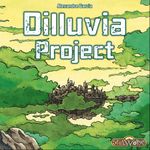
The Game I Wish I Was Playing Right NowDilluvia Project might not be new. Perhaps it was just picked up and rereleased by TMG? Regardless, let's talk about it. Dilluvia Project is a worker placement game with some neat little mechanisms involving stacking workers and also trying to use your large worker on an action before other people. You're all competing to attract the most population to the platform in the clouds, and in the process you construct buildings that grant you some amazing ongoing benefits. The draw of this game income phase snowballing, allowing your engine to really roar by the end, while still not overstaying its welcome. The unique way you gain population (points) is also worthy of note (but hard to explain without going too indepth). The one play we had was really fun. If it had a solo mode I'd have bought it immediately.
The Biggest SurpriseSushi Roll is better than Sushi Go. Often times a dice version of a game is considered the "slimmed down" version, maybe even less fun. But Sushi Roll is
better than any version of Sushi Go. Admittedly, Sushi Go is not my cup of sencha (Japanese green tea, get it?). Set collecting and drafting cards isn't very engaging for me, partly because you know exactly what you're passing to the other players, and sometimes, you know exactly what you're getting before you get it. In Sushi Go you're passing multiple
types of dice, not the die faces. Each time a dice conveyer belt slides in front of you, you reroll. That means players can play the odds, plus rolling dice is fun. Every turn has a new moment of revelation for everyone involved. (This particularly makes it better than Sushi Go at lower player counts.)
Let's Be Honest: The Game That Will Likely See The Most Plays5211 is dead simple. You have 5 cards of varying numbers and colors; the first turn all players reveal 2 cards, then draw back up to 5; next turn reveal 1 more, then draw; last turn reveal 1 more, then draw. 5 cards: play 2, 1, then 1. Over and over. The players score points according to the majorities of card colors each round. Whichever color is has the majority stays with the players for counting at the end of the game. All other cards are discarded. There are additional rules about the "kododo" cards showing a lizard and basically counting for 1 point each. Oh, and the whole point is to play the majority color,
but not too much of it or else it's out of the running. When people understand the game, it absolutely flies by. Placing cards quickly and simultaneously. You'll have a flop that invalidates your cards, or the flop that makes everyone score nothing. Or those darn kododos pop out and ruin everything and it's all surprisingly fun.
Two Abstracts to Keep an Eye OnThe abstract everyone is talking about is
Shōbu. Two players compete with the classic pieces: white and black. But Shōbu's board and movement are distinctly different from traditional abstracts. The "board" is actually 4 boards, two lighter and two darker quadrants. And a player's movement consists of a "passive" and an "aggressive" move. First, the passive move can not push any stones on the board (and must be played on either the dark or light board in front of you). Second, the aggressive move must follow the same direction and distance as your passive move, but it
can push an opposing stone off the board (and must be played on an opposite color board). A player wins by removing the stones of an opposing color from one of the four boards. That's the game. It's delightfully thinky. We only scratched the surface with two plays, so I can't comment on its longevity or depth, but it certainly has potential and immediately feels iconic in structure and presentation.
passtally is another abstract that might go under the radar (it's not officially capitalized, but from now on I'll be changing that). Passtally partially stands out as it plays 2-3 players and it seems like it'd be great at both player counts. Basically make connections between your markers on the edges (which you can move), try to pass through as many tiles as possible (bonuses for tall stacks of tiles). Tally up your pass throughs (get it? "pass tally"?) after every turn. Simple, and at first glance, mind boggling. But it's really fun to feel your brain
see the pathways and how they work out.
Other Games We Played:
But Ones Don't Feel Like I Can Give a Particularly Nuanced Opinion AboutCat Café Absolutely charming and completely solid roll and write. No frills, just good gameplay. I only wish the sheets were a bit larger.
Pandemic: Rapid Response We love Pandemic and might end up owning this, but it doesn't feel like Pandemic to me. It's a different game, and a potentially fun one, but if you don't like stressful timed games, don't expect this one to change your mind.
Noctiluca I might need to try this again, though I don't know if I'll ever feel the need to make it happen. Some really interesting, counter-intuitive things going on, like the end-game majority scoring and the points-tiles starting low and getting higher (these two things are related).
Mental Blocks My partner walked away with the promo cards for this game (planning on purchasing at home) and she's looking forward to trying it with our game groups. Co-op shape arranging where everyone only gets one perspective.
Hats I could see myself getting into this. It has simple rules but hard-to-grasp scoring... a lot like other good card games we play. Probably better at more than 2 players though.
Era: Medieval Age It deserves more of a description, but the pedigree and production of Era doesn't need my help. Perhaps more confrontational than you'd first assume, though not as "interactive" as those players seeking such confrontation might desire.
Catlantis Target market is way younger than us. I can't recommend this game. But look at those cats! So cute!
Cartographers: A Roll Player Tale I don't know anything about Roll Player, so maybe this isn't meant for me? In a market full of surprisingly good roll and writes, this just didn't compete. We only played once, but it seemed oddly "solvable," preventing us from imagining we were so clever and different than other players. Maybe more plays would demonstrate more depth and player divergence?
Moon Base An unlikely abstract with unlikely components by a publisher who focuses on unlikely games. Worth checking out.
Games I Wish We Had Time to TrySet a Watch had some good buzz. It sold out. Plus we just couldn't find time to fit it in. One friend we trust has said amazing things about it. Another friend owns it, so maybe we'll still get a chance to try it.
PARKS just looks so pretty. The components are great, but that card art is what stands out. And we love our National Parks! Upon further review, PARKS seemed maybe a little more simple than I would have hoped, so it kept sliding off our priority list. Maybe I'll get a chance to see if I'm wrong sometime soon.
In ClosingGen Con 2019 was great fun for us. We did get eliminated about middle of the pack in the Pandemic Survival Semi-Finals, but it's always fun to compete in that tournament, win or lose. We successfully walked away from Gen Con with very few games purchased, and actually they were all purchased by my partner. She bought 5211, Watergate, and Cat Café. We also walked out with the Quacks GeekUp Bits and look forward to receiving the Herb Witches expansion in the mail on Wednesday (ordered direct from the publisher. They sold out too quickly at Gen Con!). I disocverd lots of games to put on my "want to play more" list, but I'm not sure if many of them are "need to own." That's more about my own bursting library than the games themselves.









![DEFAM – Not Now (2026) [24-bit FLAC]](http://imageurl.xyz/images/2026/07/01/Defam-Not_Now-BUTS82-24BIT-WEB-FLAC-2026-BABAS.jpg)


/pic9693140.jpg)


/fit-in/580x348/filters:format(webp)/english-betterindia/media/media_files/2026/07/16/pankaj-kumar-singh-ironman-2026-07-16-18-08-45.png)





/fit-in/580x348/filters:format(webp)/english-betterindia/media/media_files/2026/07/16/pankaj-kumar-singh-ironman-2026-07-16-17-59-22.png)